


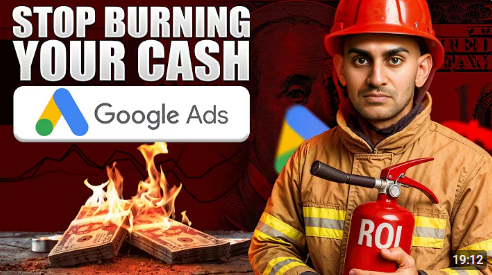
Imagine you are watching your entire monthly budget vanish in one weekend with zero leads to show for it. I’m Saad Asif, the CEO of Directions Solutions, and I know that in 2026, the digital landscape is a high-speed machine where one wrong setting can drain your resources while competitors scale effortlessly. Pinpointing the Key mistakes in Google Ads Strategy businesses should avoid in 2026 is no longer just a tip; it is a survival tactic to keep your brand profitable in an automated world.
This blog post explores the critical shift in Google Ads strategy for 2026, moving away from manual micromanagement toward strategic AI guidance. As costs per click rise and automation becomes the default, the article highlights that nearly 40% of ad spend is currently wasted on outdated tactics.
1. Inconsistent Conversion Tracking Setup
Data is the fuel for the Google Ads engine. If the fuel is impure, the engine sputters and stalls. Perhaps the biggest problem of 2026 so far is the improper use of conversion tracking. If your attribution models and conversion windows aren’t aligned, you create a massive blind spot.
- Impact on Business Performance
This inconsistent tracking makes it difficult to understand the value of each click. If one campaign uses a 30-day window to track sales and another uses a 7-day window, you can forget about getting accurate metrics. In 2026, data standardization will be key, particularly because the automated system needs to see a path to success in order to bid accordingly.
- Steps to Standardize Tracking
To resolve this, you need to take consistent conversion actions across all accounts. This means that all campaigns should use the same conversion goals. This will give a fair playing field for the AI to analyze which keywords and audience are driving the ROI.
2. Ignoring Exact Match Keywords
However, with the advent of Broad Match as the default option, many have completely abandoned Exact Match. This is a huge mistake. Broad Match is good, but it is often missing the precision required to deliver high-value conversions at the bottom of the funnel.
- Benefits of Exact Match in 2026
Exact Match is more important now than ever. It continues to outperform every other type of match with regard to conversion rates. With the advent of new types of matches, the knowledge of what the end user actually typed allows you to craft a message that is perfectly relevant to their search. This is still one aspect that the AI is not quite able to replicate without your guidance.
- Integrating with Modern Strategies
The way to use Exact Match is to use it as part of a hybrid approach. Use Broad Match to find the latest trends and high-intent signals, but use Exact Match for your high-value search terms.
3. Inconsistent Campaign Settings
As your Google Ads account grows over the years, it becomes a tangled mess of different settings. Perhaps you have a campaign that targets the entirety of Pakistan, but another campaign accidentally targets international regions. These tiny mistakes lead to massive inefficiencies.
- Common Inconsistencies to Audit
Look at where your ads aren’t showing, when they run, and how you’re bidding. Maybe campaigns meant to go all day actually cut out at five. That kind of mismatch can mess up performance without warning. You might think the plan failed – when really it was never running right.
- Best Practices for Standardization
Perform a monthly audit of your account settings. Standardize your geographic targets and ad schedules for your campaign groups. This way, your budget is being spent where it has the highest chance of succeeding.
4.Overemphasizing Ad Strength Metrics
Google loves to tout their “Ad Strength” meter. It’s easy to feel like you’re not doing a good job if your ad doesn’t receive an “Excellent” rating. However, experts within the field have discovered a rather odd trend. No one should worry about their Quality Score because Ad Strength doesn’t affect it.
- Misconceptions Regarding Ad Strength
Advertisers try to attain an “Excellent” rating by adding all the suggestions provided by Google. This usually results in a messy ad that ends up having a negative effect on conversions. In reality, a “Poor” or “Average” ad with a direct message to a customer’s pain point will convert far better than a “Good” ad that simply attempts to check boxes.
- Focusing on Conversion Data Instead
Instead of focusing on suggestions provided by an AI, concentrate on real data. If your ad has a high click-through rate and a decent conversion rate, forget what the Ad Strength meter says. Trust the results provided by your customers.
5. Neglecting Top Search Terms as Keywords
The Performance Max (PMax) campaign is quite effective, yet it has the tendency to take things for granted. Most businesses do not even look at the search terms and add them as individual keywords in the regular Search campaign.
- Risks in Performance Max Campaigns
PMax has the tendency to take over your regular Search ads. If users are searching for a specific service, and the PMax campaign is showing them a generic ad about your brand instead of the regular Search ad, you are losing money.
- Strategies to Incorporate Terms
You should scan your search term report on a regular basis. If you see a search term that is converting well, you should add it as a keyword in an ad group.
6. Heavy Reliance on Phrase Match
Phrase Match has traditionally been the go-to for balancing reach and control. In 2026, it’s become a bit of a “middle child” that will actually limit your ability to scale in real-time auctions.
- Shortcomings with Real-Time Signals
The AI now processes millions of signals per second. However, Phrase Match is too constricting to capture these high-intent moments just outside your phrase match. This will result in reduced discovery and lost opportunities within a competitive marketplace.
- Moving to Broad Match Alternatives
Consider shifting your Phrase Match budget to Broad Match with aggressive Smart Bidding. Using a strong Negative Keywords list, you can allow the AI to find new customers while keeping the “junk” traffic at bay.
7. Manual CPC Bidding Practices
Trying to set bids manually in the year 2026 is like racing a Ferrari on a bicycle. Human beings can’t process auction signals as quickly as a computer.
- Challenges in Competitive Sectors
In high-value sectors, the prices of the auction vary second by second. Manual bid caps may not let you win the most valuable auctions. You may save a few cents on a click, but you lose the thousand-dollar lead as you get outbid in a matter of seconds.
- Adopting Smart Bidding Solutions
Once you have accumulated enough data in your account, you should move to Smart Bidding. Target CPA (Cost Per Acquisition) or ROAS (Return on Ad Spend) allows the computer to bid aggressively when the conversion is likely and reduce the bid when it is not.
8. Overspinning Responsive Search Ads
Control is a good thing, but too much of it may actually hurt your performance. Pinning everything on your Responsive Search Ad (RSA) prevents Google from testing the combinations.
- Effects on Ad Optimization
Pinning everything is, in essence, running a static ad. It reduces your Quality Score and limits the AI’s capacity to serve the best combination based on the user’s search. It may also result in underutilized budgets since your ads are not winning enough auctions.
- Flexible Ad Creation Tips
Only pin the things that absolutely have to be pinned from a legal or brand perspective. Pin 10 or more headlines and 3 or more descriptions. Respect the Learning Phase.
9. Splitting Budgets Across Too Many Campaigns
Budget fragmentation is a silent killer. When you have a limited budget divided across twenty campaigns, none will ever get enough data to leave the learning phase.
- Issues with Signal Density
The AI model needs a high density of signals to work well. When you fragment your budget too much, the system will become unstable, causing prices to fluctuate.
- Consolidating for Better Results
Suggest a “one campaign per goal” model. Data-driven attribution will show you which touchpoints are driving a sale. Consolidating your budget will allow the AI to learn faster.
10. Blindly Accepting Google Recommendations
The “Auto Apply” option within Google Ads can be a double-edged sword. While some suggestions are helpful, many are geared towards spending money rather than optimizing for efficiency.
- Potential Performance Declines
There are many case studies where auto-apply settings for ads caused a tanking performance. You should never give a blank check to a system to change your strategy without your approval.
- Evaluating Before Implementation
Manually review all suggestions. Turn off the auto-apply option for bidding and keyword suggestions. Spend ten minutes a week reviewing these suggestions to determine which ones are actually aligned with your business goals.
Summary and Next Steps
Success in 2026 means moving away from control and toward strategic oversight. By fixing your conversion tracking, balancing your keyword match types, and consolidating your budgets, you are setting yourself up for massive growth. Do not get caught up in the world of chasing AI metrics and stay focused on the real-world data that will move your business forward.
Audit your account today and look for these common pitfalls. Have you seen a decline in Phrase Match performance? Let us know in the comments below and share how you are adapting your strategy for 2026.
Frequently Asked Questions
1. What are the biggest key mistakes in Google Ads strategy businesses should avoid in 2026?
For businesses in 2026, the biggest key mistake in Google Ads strategy to avoid would be inconsistent conversion tracking. This affects AI optimization in a bad way. Also, ignoring exact match results in low conversion accuracy. Moreover, over-relying on manual bidding results in low auction wins.
2. How can businesses fix inconsistent campaign settings in Google Ads?
Fixing mismatched Google Ads setups starts with reviewing each account for mismatches in location targets, timing, or bid amounts. Once spotted, align every campaign under one clear structure that fits the business goals. With fresh AI tools rolling into Google Ads by 2026, having everything on the same page matters more than ever. Consistency becomes easier when rules are shared across all parts.
3. Why is heavy reliance on phrase match a mistake in Google Ads for 2026?
The heavy use of phrase match in Google Ads is a mistake in 2026 because it does not allow businesses to discover high-intent terms in real-time AI auctions. This results in low scalability in terms of advertising in comparison to using a broader match with smart controls.
4. What alternatives are there to manual CPC bidding for Google Ads?
Use smart bids, e.g., target CPA or ROAS, once you have gathered enough data. These use machine learning to process signals that humans cannot. Concentrate on lead quality metrics for industries such as SaaS to achieve the highest ROI for 2026.
5. How does overpinning of responsive search ads affect ad performance?
Overpinning restricts combination testing, hence lowering ad strength and quality scores. This results in missed auctions and wasted budgets. Create flexible copy and pin only the essentials to enable AI to effectively target user intent.