


The digital world is changing as we move from simple links to intelligent answers. If you want to stay relevant, you must learn how to build a website that ranks in AI to ensure your voice is not lost. I’m Saad Asif, and the CEO of Directions Solutions, so my team and I have been re-architecting 1000 of our clients’ websites because with the rise of AI Search, this is about creating a digital home that machines can understand and humans can love.
In this blog, you will get a comprehensive roadmap on how to build a website that ranks in AI by focusing on natural language and technical precision. It explores essential strategies like structured data, mobile-first design, and conversational keyword targeting to satisfy modern answer engines.
Understanding AI ranking and Why It Matters.
Now it’s different – instead of typing questions and scanning pages, responses come shaped before you finish thinking. Back then, finding details meant clicking through sites one by one; today, answers arrive already stitched together. It’s less about searching, more like being guided without asking twice.
Now, ChatGPT and Claude aren’t just tools – they’re reshaping how folks dig through online info. Rather than punching keywords into a box, people talk naturally, back and forth. Behind the scenes, those smart systems comb the web, pulling together clear answers on the fly. Should your website lack structure that speaks their language, well, good luck being seen by today’s crowd.
Why Your Brand Needs to Know How to Build a Website That Ranks in AI Now
Right now, staying ahead means adjusting fast since early adopters already dominate the Answer Engine space. A site built with AI in mind delivers straightforward, accurate information. When you shape a website to rank well in AI results, you’re setting up longevity as chat-based search takes over how people navigate online.

Start by fixing what’s already broken instead of chasing fancy tools. You can also contact Directions Solutions team to get professional help because when pages load smoothly, machines notice just like people do.
- Fast Loading Speeds
A fast website shows you value your visitors’ time. Because search engines check Core Web Vitals, performance matters more than ever. When pictures are too big or hosting drags, rankings often drop. To satisfy real people along with bots, speed up every page until it feels immediate.
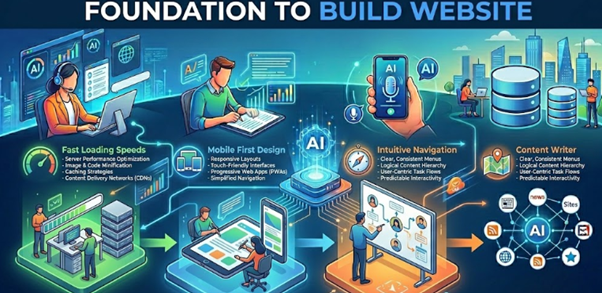
- Mobile First Design
Out there, people mostly tap into AI while moving around, using phones. No matter how tiny the display, clean mobile layouts keep words clear. Tiny taps frustrate fingers; tight lines strain eyes – frustration sends visitors away. When traffic drops fast, artificial brains start doubting your page’s worth. You can also check our blog on creating AI-powered web design top trends in 2026 to create mobile-friendly designs for your site.
- Intuitive Navigation
Picture your website like a book room. Books dumped anywhere make searching useless. Tossed piles confuse both people and machines. A clear order lets smart crawlers move without trouble. When pathways are obvious, robots index faster. Neat sections mean answers appear where they should. Structure shapes how often your words show up elsewhere.
- Keyword Strategy for Building a Website That Ranks in AI
The era of robotic keyword stuffing is dead. To master how to build a website that ranks in AI, you have to think about how people actually talk. AI search is built on natural language processing, which means it looks for context rather than just exact word matches.
- Conversational Queries
Talking to AI feels like chatting with someone who gets it. A question becomes more than a query when phrased like real talk – say, “which organic dark roast works perfectly in a French press?” rather than just “best coffee.” These detailed phrases matter because they mirror how people actually speak now. Hitting them head-on shows up exactly where answers are needed most. Precision pulls attention without shouting for it.
- Natural Language
Besides sounding real, writing plainly helps people connect faster. Since machines learn from how actual folks write, they notice stiff phrasing right away. Instead of packing keywords, try shifting ideas smoothly from one to the next. Readers stick around when words flow like talk. Even algorithms prefer pages that read like chat over robotic scripts. A relaxed rhythm just fits better in the minds, both wired and flesh.
- Intent-Based Keywords
What drives someone to search matters most. Could be shopping or curiosity guiding their query. When keyword motives become clear, match the response closely to what they truly need. Sites that fix things fast earn favour with smart algorithms.
- Content Optimization Techniques to rank a website in AI
Imagine words turning into signals robots follow. For real strength in shaping sites, smart engines notice, lay out facts so computers grab pieces without struggle.
- Comprehensive Answers
What makes a website stand out to artificial intelligence? Offering the clearest reply to something people often ask. Build separate parts on the page just for those questions. Because when responses are straightforward, machines tend to pick them up faster. A clean structure gives your content better odds of being chosen first.
- Structured Data
Out there among digital signals, structured data acts like a clear whisper to machines. Schema markup spells out the meaning behind information instead of leaving it vague. Because of that clarity, artificial intelligence doesn’t have to puzzle things out on its own. As results get sharper, so does how often your content shows up in detailed previews and smart digests.
Readability Tactics
Expert scanners, that’s what AI models are.
- H2 and H3 tags should be used to break up large chunks of text.
- Bullets should be used to describe steps.
- Paragraphs should be short and sweet to avoid overwhelming the reader.
- Important terms should be bolded to highlight key takeaways.
Building Authority and ranking the website in AI
What you believe matters online more than anything else. When artificial intelligence evaluates sites, it checks whether actual people who know their stuff are behind them.
- Earning Backlinks: A single link from another site acts as approval. If trusted sites point toward yours, the system sees value. Relationships matter most – connect often so links happen without pushing.
- Expert Author Bios: Behind every piece of content should stand a real person. When AI scans pages, it checks who is responsible. Share full author backgrounds showing time spent in the field and official credentials earned. Putting names to work makes things feel less robotic. Knowing there is expertise attached helps machines decide if they can rely on what you say.
- Measuring Your Performance: Without tracking, progress stays invisible. As old SEO numbers shift, adjusting your analysis fits the new way AI sees performance.
- Tracking Impressions: Watch your impressions carefully using something like Google Search Console. Pay attention to how frequently your pages show up in featured snippets or AI summaries. That frequency signals your approach to building websites that perform well in AI results is actually doing its job.
Common Mistakes
Failure sometimes follows good intentions. When site owners push too hard, search engines respond poorly – especially now that machines are judging every move.
- Avoiding Keyword Stuffing: Ten repetitions of one word in a short section? That ruins readability fast. Topic clarity matters more than hitting a count. Slot the term in only when it fits smoothly. Awkward stuffing breaks the flow. Natural placement keeps things clear. Forced mentions feel robotic. Context decides where words belong. Flow wins every time. Relevance guides good writing. Repetition without reason distracts. Let meaning lead. Smooth integration beats counting.
- Future Proofing Your Plan: Change never stops. Staying relevant means shifting when AI shifts, not waiting. A lasting system isn’t built on what works now, but on what comes next. Tomorrow shapes today if you pay attention.
- Algorithm Changes: Beyond today’s tools, change keeps moving forward slowly. Following updates helps you keep pace without rushing ahead blindly. Whatever shifts happen, one thing sticks around: good info must stay clear and reachable for everyone.
Frequently Asked Questions
How long does it take to see results?
Three to six months usually pass before most sites start shifting. How fast you move is closely related to how strong your domain is right now, as well as what others in your field are doing. Push steadily with solid material, and progress speeds up gradually.
Do I need special tools?
Start anywhere. Free tools get the job done just fine. Think Google Search Console, for instance. Or those handy schema builders floating around. Plenty of sites now include smart helpers right inside them. Optimisation becomes simpler when tech does some work. Good enough is often perfect
Can small businesses compete?
Niche markets give small shops an edge, especially when they tap into local searches. Because their material answers real questions, people begin to trust them. Even without big money, strong content still climbs higher with AI ranking.
What role does structured data play?
When you organise data clearly, machines get what your content means. With correct tagging, artificial intelligence can break down details without trouble. That clarity matters a lot when searches rely on smart systems.
How often should I update content?
Every few months, take a look at what’s online because new details matter most to automated systems. Stale numbers drift into obscurity unless swapped out for recent ones. Replacing old scenarios with current ones quietly strengthens how sites hold their ground. Pages stay sharp when facts breathe like they’re alive. A live website today grows step by step. Not just code matters, but how it feels to real people using it. When helping, the visitor comes before everything else; smart tools fit right in without forcing them.