


Did you know that 75 per cent of users never scroll past the first page of search results? It is a startling reality that proves if you aren’t on that first page, you are practically invisible. Whether you are a small business owner or a seasoned marketer, the digital landscape of 2026 is more competitive than ever. To win, you need an easy on-page and off-page SEO checklist.
Mastering a balanced approach is the only way to ensure your site not only exists but thrives. This easy on-page and off-page SEO checklist guide simplifies the complex world of optimization into actionable steps. By the end of this guide, you will have the tools to transform your site’s performance and dominate the rankings.
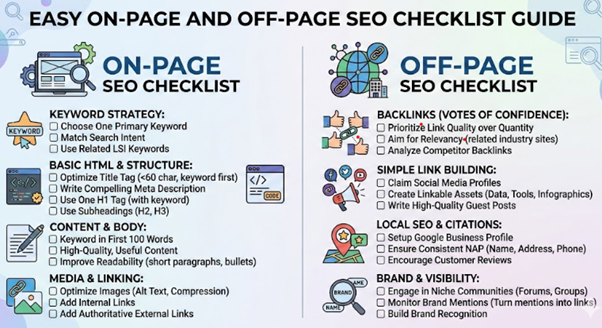
Master On-Page SEO Essentials with This Easy Checklist Guide
Your website’s strength begins with what’s inside. Even before visitors arrive, each page should stand firm, feel clear, and close gaps. Because ranking well starts with setup – tweaking titles, arranging words, guiding eyes. This work helps bots grasp meaning, just like people do. Structure matters – not only for clicks but for connection. When done right, the message lands without noise.
Target the Right Keywords
Search comes first. Begin by hunting down terms people type often, but few tackle well – terms tied tightly to what your crowd actually wants. Tools today let you sift through options, shaping picks that fit your corner of the web like a glove. Match words to needs, then watch answers land just as questions form.
Craft Compelling Title Tags
First thing people see? That title tag. Put main keywords up front, near the start. Hold the line under sixty characters so nothing disappears online. Offer something useful inside – hint at a fix or gain. Clicks rise when curiosity meets value.
Optimize H1 Headlines
The H1 is the “name” of your page. A strong headline hints at what matters most. When key terms fit smoothly into the opening line, clarity follows. Right there, a visitor feels confident – this page might just deliver. Matching header to content does that quietly. Trust grows without fanfare.
Write Click-Worthy Meta Descriptions
Around every good page sits a sharp little note that speaks before the site does. This snippet grabs attention by naming what users struggle with, slipping keywords in like they belong there. Hit about characters, so Google leaves it alone. Give people something clear to say yes to when they see it.
Refine URL Slugs
A messy web address filled with digits feels off to most people. Choose words that clearly describe the page instead. Short phrases work better than long ones. Search tools understand these clean paths faster. A person is also more likely to trust a link that reads naturally. Length matters less than clarity here.
Integrate Keywords into Body Content
In 2026, what matters most is where things stand. Start by slipping key phrases into the opening lines so readers know right away it fits. As the sentences move forward, weave in different ways of saying similar ideas – mix it up without forcing anything. Stuffing the same words too much kills rhythm; better to keep it loose, like a real talk that just happens to make sense.
Elevate Content Quality
Truth builds trust – search engines notice when you know your topic well. Build each piece on fresh ideas, not repeats of what’s already out there. Back up statements only after checking sources carefully. Let clarity lead, so visitors stay hooked from beginning to end.
Structure with Header Tags
Short chunks work better now. Try H2S for big parts, then H3S when things get narrower. Sliding keywords into those lines makes them easier to skim – also gives search bots a map. Structure shows where one idea stops, another begins.
Boost Navigation via Internal Links
Picture internal links like paths through your site. When you tie one page to another using clear link words, it shows readers where to go next. Because these connections make sense, folks tend to stick around and explore more. Over time, that structure gives strength to every part of your website.
Enhance with Visuals
Too much text scares people off. Pictures and clips help break it up, making pages feel lighter. Each image needs clear descriptions so everyone understands what it shows. Smaller files mean quicker loading without losing quality. Website Speed matters just as much as how something looks. A smooth page works better when sight and speed connect well.
Implement Schema Markup
Picture this: your webpage slips search engines a secret note about what’s inside. Tuck in organised bits of info, suddenly stars appear next to your title, cooking times show up, or answers fold neatly beneath questions. Those little highlights? They grab eyes fast. More clicks tend to follow when things stand out that clearly.
Bonus Technical Tweaks
Hidden parts matter just as much as what you see. Make sure search bots can reach key areas through your robots txt setup. Pages load faster when files are smaller, so shrink images and code. Mobile users need smooth experiences, which means designing for small screens comes first. Google treats these performance factors like basic requirements now.
Conquer Off-Page SEO Strategies with This Easy Checklist Guide
Imagine your site’s base comes from within. What happens beyond it shapes how others view you. Outside moves count just as much as inside ones when climbing up search results. Think of this part like earning nods from respected voices online. Each mention elsewhere tells Google you know your stuff. Getting noticed by big names lifts how far you go. That quiet nod from another trusted source? It speaks volumes.

Audit Your Backlink Profile
Start by checking what’s already there instead of rushing ahead. Take time to examine where your present links come from, focusing on how strong and varied they are. When bad or suspicious ones show up, get rid of them – either delete or formally distance yourself. Growth that lasts only happens when the base stays solid and clear.
Secure Quality Backlinks
One solid link can do more than dozens of weak ones. Top sites in your field? That is where you want presence. Write strong pieces for respected platforms, earn coverage that matters. Trust builds when known sources point to you. A few powerful mentions often outshine endless low-tier results. Real impact comes from being seen in the right places. Visibility on trusted sites sends signals that search engines notice. Not every backlink holds equal weight – choose carefully. Earning attention from leaders lifts how others see your work. Focus shifts naturally when authority backs what you offer.
Spy on Competitor Links
Watch what others do – they leave clues behind. See which sites point to your rivals, one by one. Each link shows a path you might follow. Spot trends they’ve tapped into. Then walk those paths with your own step, sharper and more thoughtful. Their moves become your map, just redrawn. Quiet learning beats loud guessing every time.
Produce Link Magnet Content
Now and then, something feels worth passing along. Try crafting deep-dive guides, fresh research, or visuals that stick. Hit the mark with quality pieces shared the right way, and other sites start pointing readers your direction without asking. Good work pulls attention like gravity.
Reclaim Lost Opportunities
Now and then, useful links vanish – maybe someone wrote about you but forgot the hyperlink. Spot those missing connections by monitoring when references pop up without URLs attached. When a site once linked to you but doesn’t anymore, get in touch gently to ask if it can come back. Should your name appear somewhere unlinked, try sending a warm message suggesting a live link might help readers. A small nudge like that often leads to renewed visibility.
Spark Branded Searches
Something shifts when folks look up your brand by name – it shows search systems you’re legit. Try getting mentioned on podcasts or sent out in newsletters, maybe even blogs. Each extra mention nudges algorithms into seeing you as someone everyone knows. The more they see those searches climb, the clearer it becomes: you belong.
Monitor Brand Mentions
Listening closely helps. Tools that monitor online talk about your brand come in handy now and then. Jump into those conversations – not to push, but to connect. A quick thanks might just open doors down the road.
Handle Reviews Smartly
These days, what others say shapes how people see your business. Collect good comments where customers look – Google Business Profile works well. When someone writes a response, answer it, especially if it is hard to hear. Doing so proves you pay attention and care about trust.
Showcase Testimonials
Your achievements deserve space up front. Try showing clear feedback where people talk about actual outcomes they’ve seen. That kind of comment acts like a nod from others, quietly strengthening how outside platforms view you. It also helps strangers landing on your page feel certain you’re legitimate.
Amplify on Social Media
Sure, social media won’t tweak your ranking outright – yet it pulls in visitors who do. Spread your posts around while talking back and forth with followers; momentum builds from there. Those extra clicks? They stretch how far your strongest pieces travel.
Join Online Communities
Start showing up where your people hang out online. Offer real help – no pitch tucked in the corner – and trust builds quietly over time. Links appear when others notice you’re actually making things clearer for everyone.
Partner with Influencers
When you team up with influencers, your brand might show up on countless screens overnight. Their support acts like a trusted nod – something rare – and quietly boosts how seriously people take your site.
Track Performance Metrics
Without measurement, progress stays invisible. Analytics show how backlinks grow, where traffic comes from, because numbers reveal patterns. When data points shift, so should your approach, since only real results guide effective effort. Focus follows evidence, once you see which actions create change.
Stay Ahead of Trends
Now here’s the thing – search engines change their rules more often than people think. When news drops about an update, pay attention instead of waiting it out. Shifts happen fast, yet those who adjust early tend to keep ranking. Falling behind means losing ground without even realizing it.
Conclusion
One way to grow fast online starts here. When your website looks sharp and makes sense inside, off-site actions shout its value beyond your pages. Following this straightforward list – both what happens on your site, yet also what builds it elsewhere – sets a path nobody can ignore. Real results begin where effort meets visibility.
Yesterday would’ve been perfect. Right now works just fine. Grab those checklists. Plug them into your site. See how high things climb. People are already looking. Help them land where they need to be.
Frequently Asked Questions
What is the difference between on-page and off-page SEO?
What lives inside your site – words, terms, layout – that’s where on-page SEO puts its energy, shaping how well it matches what people search for. Backlinks? Citations? Those come from outside, part of off-page moves that quietly boost how much sites are trusted. One leans inward, the other reaches out; both pull in the same direction when rankings climb.
How often should I update my on-page SEO checklist?
Once in a while, maybe after big site changes, go through the list again – staying sharp means staying visible. Watch how things perform, notice shifts in search patterns, that kind of thing keeps you on track. Small fixes here and there? They add up, slowly pushing results higher or just holding steady when others drop off.
Can beginners handle this easy SEO checklist guide?
Of course, getting started is easier than most think. Modern tools take the hassle out of digging deep or putting ideas into motion. Begin by fine-tuning keywords – then layer on more complex moves over time. Small actions add up fast, especially when done regularly. Even those just beginning see shifts pretty quickly.