


In the development of Financial websites, it is important to handle sensitive customer information, payments, account details, and other valuable data. That makes robust security a core foundation of modern fintech engineering. I’m Saad Asif, the CEO of Directions Solutions, and in my experience of more than a decade, Fintech Website Development requires far more than an attractive interface.
This comprehensive guide explores seven vital security practices that help fintech companies build safer, faster, and more trustworthy digital platforms.
How to Build a Secure Custom API Web Portal
A Fintech Website Development Strategy demands secure APIs, strong data encryption, reliable authentication mechanisms, and carefully engineered infrastructure to safeguard both businesses and users. Constructing a custom API web portal requires strict access management, encrypted communication channels, and real-time operational monitoring.
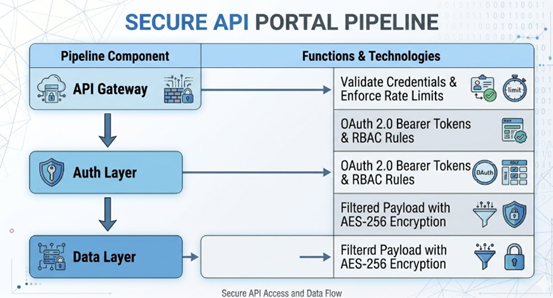
- Define Security Requirements: Map all necessary system touchpoints and establish least-privilege data access boundaries.
- Implement OAuth 2.0 Frameworks: Enforce token-based access controls for all inbound and outbound requests.
- Restrict Scope Permissions: Grant endpoints access only to the precise data fields required for execution.
- Deploy Real-Time API Analytics: Track request frequencies, payload sizes, and authentication failures to catch malicious activity early.
7 Vital Security Practices for Fintech Website Development
Fintech platforms are primary targets for cybercriminals because they aggregate, process, and store highly lucrative financial and personal records. A single vulnerability in a digital finance application can trigger devastating data breaches, direct monetary loss, regulatory fines, and irreparable damage to brand reputation.
1. Build a Secure API Architecture
APIs serve as the operational connective tissue linking fintech websites with core banking systems, payment processors, customer databases, and external partner networks. Prioritizing API defense is essential when constructing a custom API web portal.
- Authentication & Authorization: Implement OAuth 2.0 or OpenID Connect to verify access rights.
- Rate Limiting & Throttling: Restrict incoming call volume to block brute-force attacks and DDoS attempts.
- Input Validation & Sanitization: Filter incoming API parameters to prevent SQL injection and cross-site scripting (XSS).
- Continuous Monitoring: Track endpoint usage to identify abnormal traffic spikes or unauthorized extraction attempts.
Exposing poorly protected APIs creates direct backdoors into core financial databases, making strong API governance non-negotiable.
2. Use Strong Data Encryption
Encryption ensures that data remains unreadable even if intercepted or accessed without authorization. Robust financial platform security requires two distinct forms of encryption:
- Data in Transit: Protect communication between user browsers, web servers, and third-party APIs using TLS 1.3 protocols.
- Data at Rest: Secure databases, log records, and backup archives containing account credentials, payment histories, and personal details using AES-256 encryption.
Cryptographic keys must be managed separately from the underlying data using hardware security modules (HSMs) or enterprise key management systems.
3. Strengthen User Authentication and Access Control
Financial applications require stricter access standards than standard consumer portals. Implementing multi-factor authentication (MFA)—using authenticator apps or hardware security keys—adds essential protection against compromised passwords. Combine MFA with strict role-based access control (RBAC), robust session timeout policies, and real-time login monitoring to isolate user privileges and prevent unauthorized account access.
4. Create Secure Fintech UI Layouts
Security mechanisms should never compromise user experience. Thoughtfully designed fintech UI layouts merge usability with protection by making sensitive actions transparent and intuitive.
- Clear Transaction Confirmations: Present detailed transfer summaries before final execution.
- Visible Security Signals: Display real-time security alerts and active session status indicators.
- Simple Account Navigation: Structure privacy settings and security options clearly.
- Contextual Error Messages: Provide helpful user feedback without revealing underlying system architecture details.
Combining clear design with strong backend security builds user trust and reduces accidental user errors.
5. Follow Secure Finance Web Development Practices
Adopting secure finance web development methodologies ensures that security is integrated across every stage of the software development lifecycle (SDLC). Development teams should follow established secure coding standards (such as OWASP guidelines), perform peer code reviews, run static and dynamic application security testing (SAST/DAST), and regularly audit third-party code libraries.
6. Protect Third-Party Integrations
Fintech web platforms rely heavily on external services for identity verification, payment processing, credit scoring, and analytics. However, third-party integrations introduce external supply chain risks. Mitigate these risks by enforcing strict API permission boundaries, performing regular vendor security reviews, limiting data sharing to strictly necessary attributes, and continuously monitoring external data connections for unusual behavior.
7. Monitor and Update the Financial Platform Continuously
Maintaining security is an ongoing operational commitment. Systems must be continuously monitored for suspicious API queries, failed login attempts, and unusual transaction patterns. Deploy automated security information and event management (SIEM) systems to flag anomalies instantly. Apply software patches promptly, perform regular vulnerability scans, and maintain an incident response plan to ensure rapid mitigation if a security event occurs. Sustained Fintech Website Development success relies on proactive, continuous protection.
While both models prioritize rigorous security, fintech platforms rely far more on dynamic API ecosystems and agile third-party integrations.
Common Security Mistakes to Avoid
- Weak API Authentication: Relying on basic API keys instead of robust OAuth 2.0 frameworks exposes core endpoints to interception attacks.
- Over-Privileged Access Profiles: Granting broad administrative permissions increases system vulnerability if an account is compromised.
- Neglecting Dependency Updates: Using outdated open-source libraries leaves applications exposed to known exploits.
- Excessive Data Retention: Collecting and storing unneeded user data increases risk and compliance burdens.
- Treating Security as an Afterthought: Adding security controls after launch leads to brittle architecture and costly rework.
How Security Builds Trust in Fintech Platforms
Security directly drives customer acquisition and retention. Financial users abandon platforms that appear uncoordinated, slow, or insecure during onboarding or transaction execution.
Providing transparent login protocols, clear transaction confirmations, reliable data protection disclosures, and high uptime demonstrates operational maturity. Investing in robust financial platform security converts regulatory requirements into a clear competitive advantage that strengthens customer retention.
How to Balance Security With User Experience
Security controls should safeguard users without creating unnecessary friction. Striking the right balance requires thoughtful execution across both visual design and system architecture:
- Streamlined Authentication: Implement passwordless login protocols, biometric verification, or adaptive risk-based authentication to reduce login friction.
- Explicit Visual Indicators: Use clear notification banners to confirm completed transactions and highlight security updates.
- Intelligent Step-Up Security: Request secondary verification only during high-risk actions, such as large transfers or account profile changes.
- Optimized UI Layouts: Structure intuitive fintech UI layouts that present transaction details and security statuses clearly without cluttering the screen.
Aligning user experience design with underlying technical safeguards creates secure digital platforms that feel fast and effort-free.
Future Trends in Fintech Website Development
As financial technology evolves, website security strategies must adapt to address new capabilities and emerging threats.
- AI-Powered Fraud Detection
Machine learning models evaluate transaction velocity, device fingerprints, and user behavior in real time to intercept fraudulent transactions before settlement occurs.
- Smarter API Security
Advanced API gateways use behavioral analytics to detect anomalous traffic patterns, parameter manipulation, and automated credential stuffing attempts automatically.
- Passwordless Authentication
Adopting WebAuthn and FIDO2 standards allows users to authenticate securely using device biometrics or hardware keys, eliminating password-based vulnerabilities.
- Personalized Privacy Controls
Next-generation platforms integrate granular privacy controls directly into user dashboards, allowing individuals to manage data permissions and third-party access seamlessly. Staying ahead of these technological developments ensures that modern Fintech Website Development initiatives remain secure, compliant, and scalable.
How to Choose the Right Fintech Development Approach
Selecting a development partner or planning an internal software architecture requires evaluating key operational capabilities:
- Proven Financial Track Record: Demonstrated experience building compliant, high-availability software platforms.
- Specialized API Expertise: Deep experience engineering, documenting, and securing enterprise API ecosystems.
- Integrated Security Testing: Embedded SAST/DAST automation, code review standards, and third-party penetration testing.
- Regulatory Knowledge: Thorough understanding of global and regional compliance mandates (such as PCI-DSS, GDPR, and open banking regulations).
- UI/UX Capabilities: Ability to design intuitive interfaces that simplify complex financial workflows.
- Long-Term Support Frameworks: Dedicated infrastructure management for ongoing monitoring, patching, and system maintenance.
Choosing a development partner based solely on initial cost often leads to security vulnerabilities and expensive platform rebuilds later.
Conclusion
Building a successful digital finance application requires a balance of engineering precision, interface design, and deep security architecture. Modern Fintech Website Development must focus on protecting sensitive assets while delivering reliable user experiences. When security standards—such as encrypted data flows, secure API gateways, multi-factor authentication, and continuous monitoring—are integrated into early planning, organizations build resilient financial platforms that safeguard operations, comply with regulatory standards, and earn long-term user trust.
Frequently Asked Questions
1. What is Fintech Website Development?
Fintech Website Development is the specialized engineering of web platforms and software applications for financial services. It integrates secure software architecture, API connections, financial system integrations, responsive user interface design, and rigorous data protection mechanisms to deliver fast, reliable digital financial experiences.
2. Why are secure APIs important for fintech websites?
APIs enable fintech platforms to communicate with core banking networks, payment gateways, credit databases, and external applications. Securing these APIs with strong authentication, authorization controls, rate limiting, and encryption prevents unauthorized access and stops data breaches at integration points.
3. How does encryption protect financial websites?
Encryption transforms unencrypted data into unreadable ciphertext using advanced mathematical algorithms. It ensures that sensitive customer records, payment details, and account credentials cannot be read or exploited by unauthorized parties while moving across networks or sitting in storage.
4. What makes fintech UI layouts secure?
Secure fintech UI layouts present complex financial information clearly while seamlessly incorporating safety features like multi-factor authentication steps, session alerts, transaction confirmations, and accessible security settings. Well-designed interfaces prevent user error and reinforce platform legitimacy.
5. How can businesses improve financial platform security?
Organizations can strengthen platform security by enforcing strict API management, deploying robust data encryption, requiring multi-factor authentication, performing regular security code audits, monitoring real-time system logs, and updating software components continuously.